Since the founding of the Federal Reserve (Fed) on December 23, 1913, the institution’s cause as an “independent” body has consistently been used to fend off any external pressure on US monetary policy. Congress has no say in its budget, as evidenced by the extraordinary $2.5 billion price tag on renovations at the Fed headquarters. The president cannot call for the removal of board governors, even when “for cause” as it was in the case for Fed Governor Lisa Cook in her alleged case of mortgage fraud. A simple mention of such external influences is met with harsh resistance, creating a nice working bubble with which accountability is insubstantial within the Fed. Proponents of this bubble may argue that this artificial crevasse keeps monetary policy strictly on an ideal, scholarly path when in fact the same walls that block democratic oversight also shelter this unchecked group of unelected insiders.
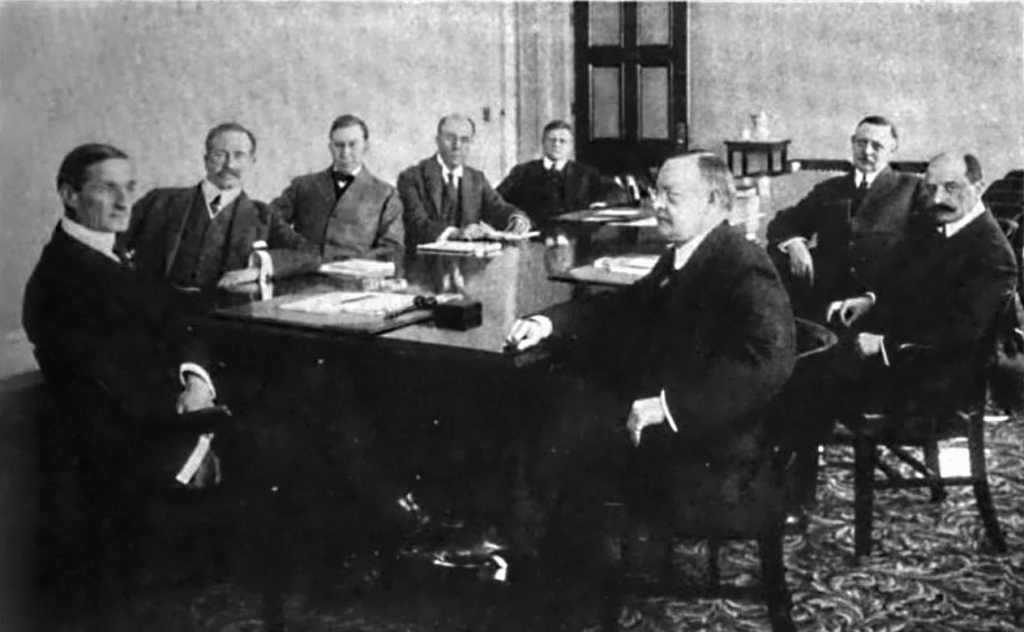
The Federal Open Market Committee (FOMC) is made up of 12 voting members, 7 of whom are governors appointed by the president and confirmed by the Senate. These governors serve staggered 14-year terms, which means that each member is guaranteed to see at least parts of four presidential terms. The rest of the 5 voting members are selected on a rotating basis from regional Reserve Banks, with the exception of the New York Fed President who is a permanent voting member.
This structure is reinforced by the neo-Keynesian framework, which centers almost entirely on managing aggregate demand through interest rates and asset purchases to meet arbitrary inflation and employment targets set by the Fed. The famous 2% inflation target was adopted in 2012 and was not emperically derived from any economic theory but rather sourced from an offhand comment during a television interview with a New Zealand finance minister in 1988.
The dual mandate of maximum employment and price stability itself was established in 1978 through amendments to the Federal Reserve Act. It is important to remember that for 60 years, the primary role of the Fed was limited to providing liquidity to banks and managing the currency. Another key point is that the 1978 amendment included a third mandate of maintaining moderate long-term interest rates, which was quietly phased out with the need for volatile interest rates to drive demand-side economic policy. The fact that one of the original mandates was so easily scrubbed could make the whole mission of the “dual mandate” look less firm.
The irony is that the concentrated demand-centric neo-Keynesian personnel that makes up the Fed may actually be the real threat to the goal of having an independent body that controls monetary policy. The top economic doctorate programs teach Dynamic Stochastic General Equilibrium (DSGE) models and stress demand-side economics with the belief that aggregate demand is the primary driver of economic output along with inflation. As the relevance of the Fed depends on maintaining demand-side factors at the forefront of Fed policy, the institution is obliged to continuously dip into the same neo-Keynesian pool of economists. The reality that a tight-knit group of economists can determine policy gives little confidence to the “independent Fed” thesis.
The traditional Austrian school of economics stresses individualism and supply-side economics. It share some similarities with game theory in that both focus on individual human action and decision-making rather than grouped approaches. Austrian economists highlight that credit expansion through artificial means would only lead to capital misallocation and inevitably trigger larger busts. In other words, Austrian economists would not intervene as much in monetary policy and many of the 24,000 employees currently at the Fed would be working elsewhere. The neo-Keynesian dominance in today’s economy leads to a system that booms and busts with each cycle and keeps the system under the control of the career bureaucrats at the Fed.
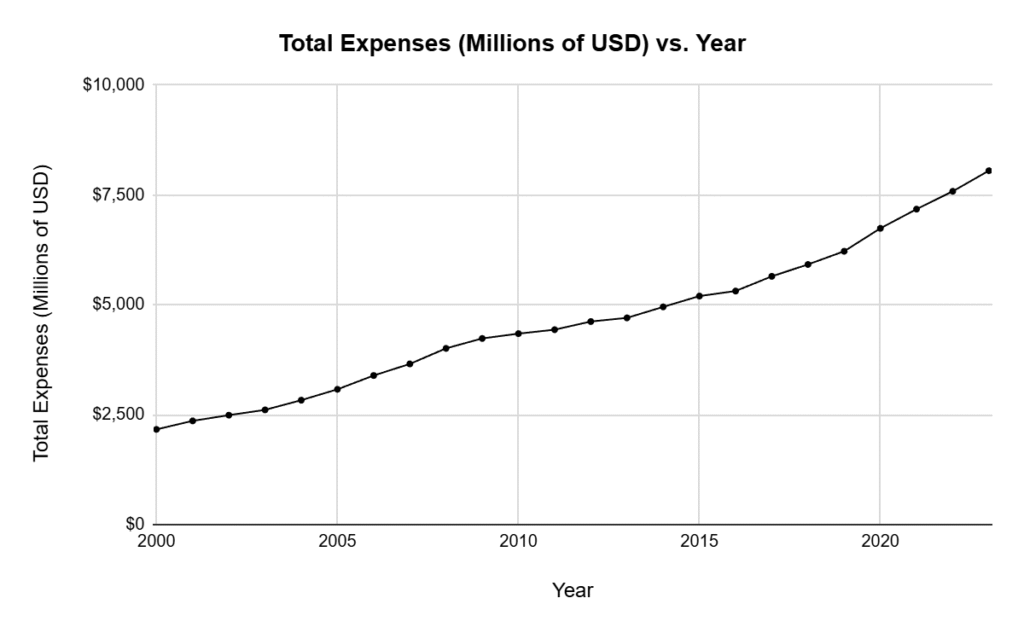
It is obvious that the loudest cries for Fed independence would come from politicians along with the economists at the Fed. There are also reflexively conventional voices which exist only to support groupthink that add to the explicit display of outrage. The “independent” nature that claims to protect the Fed against politics and irrationality ends up doing the exact opposite in practice. The Fed ultimately needs not answer to any elected body of government and its participants face no meaningful consequences for potential misdeeds in determining the country’s monetary policy.
Ironic, isn’t it?